


Orthopedics · Elbow
Elbow surgery
Has your elbow hurt for months, does your little finger tingle, or can you not straighten your elbow fully, or does it feel unstable? When the symptoms persist and limit you, a targeted procedure comes into question: from surgery for tennis elbow and release of the ulnar nerve to ligament reconstruction and joint replacement. If everything is in order, a smaller procedure can take place as soon as within a week of the consultation.
- No referral from a general practitioner needed
- Surgery by Prof. MUDr. Radek Hart
Under general or regional anesthesia
- surgery is considered
- 6–12 monthsfor tennis elbow, when symptoms last that long
- after tennis elbow surgery
- 4–6 monthsusually until return to sport
- anesthesia
- generalor regional, which numbs the whole arm
- to the procedure
- 1 weekfrom the consultation, if everything is in order
01When a procedure is considered
Overloaded tendons, a compressed nerve
The elbow joins the upper arm bone to the two forearm bones, the ulna and the radius. The tendons of the forearm muscles attach to its inner and outer bony bumps (epicondyles), the ulnar nerve runs behind the inner bump, and a bursa sits at the tip of the elbow. These problems are mostly treated with a smaller procedure.
-
Tennis elbow
Pain and burning on the outer side of the elbow, a weaker grip, pain when gripping, turning the wrist or shaking hands. The tendon of the wrist extensors wears down at its attachment through overload and develops small tears. Most often between ages 30 and 50, and not only in tennis players. When symptoms last 6 to 12 months, the surgery removes the damaged part of the tendon and the healthy tendon is reattached to the bone.
-
Golfer's elbow
The same on the inner side of the elbow: pain or burning, sometimes shooting toward the hand, a weaker grip. Usually between ages 40 and 60. When symptoms last several months, the damaged part of the tendon is removed and the tendon is sutured or anchored to the bone again.
-
Ulnar nerve compression
The little finger and ring finger tingle and feel numb, especially with the elbow bent, at night or when talking on the phone. Later the grip and the fine movement of the fingers weaken. With severe and long-lasting compression the muscles of the hand waste away, and that does not come back. During surgery the fibrous roof of the tunnel the nerve runs through is cut so the nerve has more room; sometimes the nerve is moved in front of the inner bump.
-
Elbow bursa
The bursa at the tip of the elbow fills with fluid after a blow, long leaning on the elbow, or with rheumatism or gout, then swells and hurts. When symptoms last and limit you, the bursa is removed; the muscles, ligaments and joint are not damaged in the process. A red and hot elbow, especially with a fever, may mean an infection and needs a doctor right away.
- tendons of the forearm muscles
- painful tendon attachment
- ulnar nerve
- elbow bursa
- elbow bones
02Larger reconstructions
A stiff, unstable or worn elbow
The elbow loses motion faster than other joints, and restoring it is demanding. After injuries, fractures and dislocations it therefore often stays stiff or loose, or wears out faster. These conditions are treated with larger, precisely planned operations.
-
Stiff elbow
The elbow cannot be fully straightened or bent, most often after an injury or surgery, with arthritis or joint inflammation. Motion is blocked by a thickened and hardened joint capsule, adhesions, bone spurs or loose bodies. The surgery releases adhesions and scar tissue and removes the obstacles to motion. Motion usually improves, but not always to the full range.
-
Unstable elbow (ligaments)
After a dislocation or a torn ligament the elbow can stay loose: it clicks, catches, hurts, or you feel it may pop out, typically when you push up from a chair with your hands. During surgery the ligament is sutured or replaced with a graft from your own tendon. A broken bone needs to be repaired at the same time.
-
Arthritis and elbow replacement
Worn cartilage and bone spurs cause pain and loss of motion, and the elbow grinds or locks on loose bodies. It is often the result of a fracture or dislocation. As long as the cartilage is not completely gone, arthroscopic cleaning of the joint helps. When the joint is destroyed, elbow replacement is considered: a metal and plastic joint with stems in the upper arm bone and the ulna.
-
Radial head replacement
The radial head is the upper end of the bone on the thumb side of the forearm; it lets you turn the palm up and down. When it is shattered after a fracture so that it cannot be put back together, it is replaced with an artificial one. A loosened or painful radial head replacement can also be exchanged.
03When to operate
When surgery is appropriate
Surgery comes into question when symptoms last and limit you, or when permanent nerve damage threatens. Whether and when to operate is decided by the doctor at the consultation.
Symptoms
Pain lasts for months
Tennis or golfer's elbow.
- Tennis elbow hurts for 6 to 12 months
- Golfer's elbow hurts for several months
- Pain when gripping, turning the wrist or shaking hands
Nerve
Compressed ulnar nerve
When permanent nerve damage threatens.
- Grip and fine finger movement weaken
- Hand muscles waste away, and that does not come back
Findings
A stiff, loose or worn joint
Often after an injury.
- The elbow cannot be fully straightened or bent
- The elbow clicks, catches, or you feel it may pop out
- The joint is destroyed by arthritis
Not sure whether surgery is right for you? The examination decides. Book a consultation
04How the procedure works
From booking to going home
Surgery for tennis and golfer's elbow, release of the ulnar nerve and removal of the bursa are smaller procedures. Some problems, for example loose bodies or spurs in arthritis, can be treated arthroscopically, with a camera through small incisions. Ligament reconstructions, release of a stiff elbow and joint replacements are larger operations. Prof. Hart will go over exactly what will be done with you after the examination.
-
Booking
Online or by phone. A referral from a general practitioner is not needed.
online or by phone -
Consultation and examination
Prof. Hart examines the motion, stability and strength of the elbow and the feeling in the hand. As needed he adds an X-ray or ultrasound and may recommend a nerve conduction test or magnetic resonance imaging.
diagnosis and treatment plan -
Procedure
Under general or regional anesthesia, as agreed with the anesthesiologist. Elbow replacement is usually done under general anesthesia.
as soon as within a week of the consultation -
Going home
After the procedure you stay under observation and go home as soon as everything is in order. For the first 2 days, cool the elbow and keep it higher than the heart, and move your fingers and wrist. Someone must take you home.
follow-up and physiotherapy
05Recovery and physiotherapy
Every procedure has its own pace
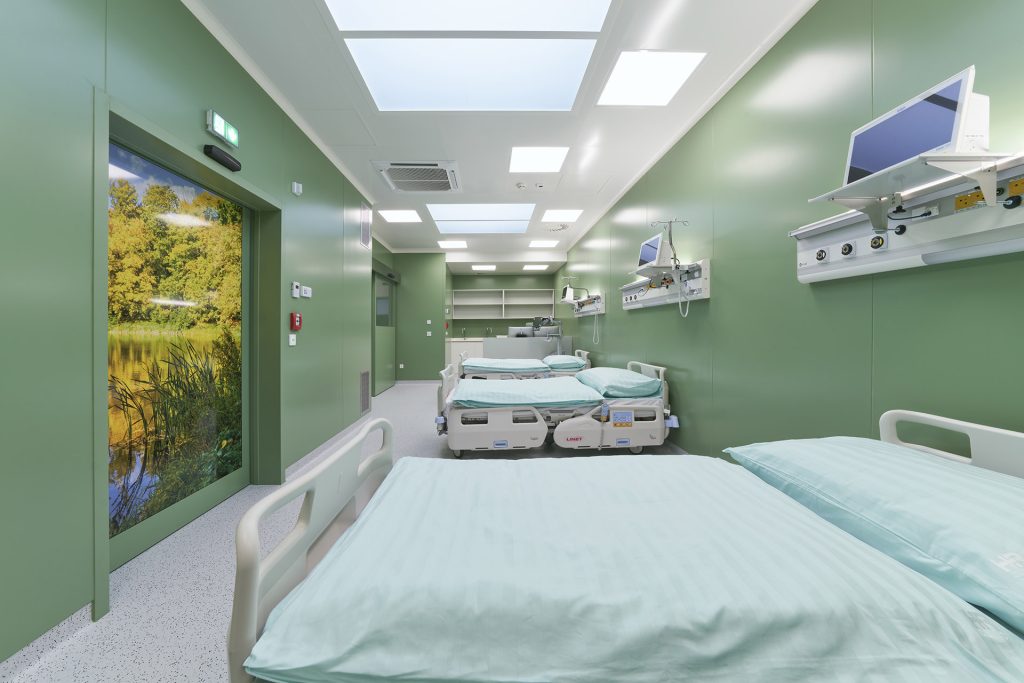
After a small procedure you return to everyday activities within a few weeks, after a reconstruction within months. The elbow stiffens quickly, so movement starts as early as possible, within the limits set by the doctor. We can continue with physiotherapy right at the clinic.
-
Tennis and golfer's elbow
After tennis elbow surgery you wear a splint for about a week, start strengthening after roughly 2 months and usually return to sport after 4 to 6 months. For golfer's elbow, a splint or band for 1 to 2 weeks, strengthening from 6 to 8 weeks, sport after 3 to 6 months.
-
Ulnar nerve and bursa
After the nerve is released you usually move the elbow right away, you only avoid lifting anything heavy for a few weeks. The nerve recovers slowly, and if it was severely compressed, the symptoms may not disappear completely. After the bursa is removed, the skin heals in 12 to 16 days, and after 3 to 4 weeks you can usually use the elbow fully.
-
Ligaments and a stiff elbow
After ligament reconstruction, a splint for the first week, exercises in a brace from the second week. Full range of motion usually returns after 6 to 10 weeks, strengthening comes after 3 months and you return to full load after 6 to 12 months. After release of a stiff elbow, targeted physiotherapy follows to maintain the motion gained.
-
Elbow replacement
You exercise the hand and wrist right away and move the elbow gently as the wound heals. For about 6 weeks you do not lean on the arm or push with it. Long term, it is recommended not to lift more than a few kilograms (usually 2 to 4.5 kg is stated) and to avoid contact sports and activities with a risk of falling.
06Who operates
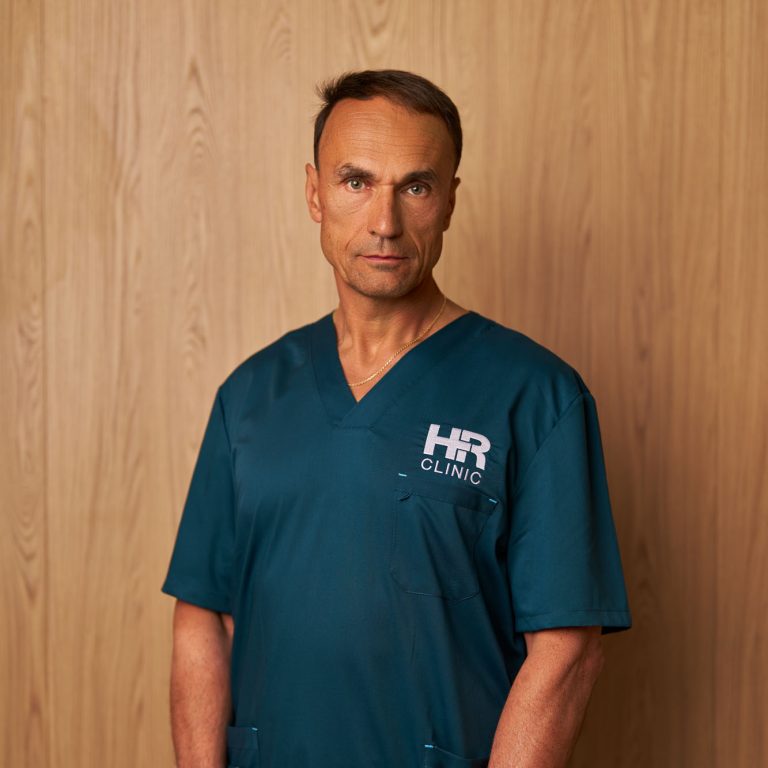
Prof. MUDr. Radek Hart, Ph.D., FRCS, MHA
Orthopedic and trauma surgeon of the musculoskeletal system, head physician of HR Clinic. In Vienna he has a private practice focused on complex orthopedic cases; he specializes in the elbow and foot. He sees patients in Znojmo and in Vienna; after a consultation in Vienna the procedure can be carried out in Znojmo. Surgery takes place in operating theaters with laminar airflow.
More about Prof. Hart Professional site ortho-hart.at
Price We will tell you the price of the procedure at the consultation, depending on the findings and the extent of the procedure.
07Frequently asked questions
What patients ask most often
When is tennis elbow operated on?
When symptoms last 6 to 12 months and limit you. During surgery the damaged part of the tendon is removed and the healthy tendon is reattached to the bone. You start strengthening after roughly 2 months and usually return to sport after 4 to 6 months.
My little finger and ring finger tingle. Does it come from the elbow?
It may be compression of the ulnar nerve, but a nerve compressed in the wrist or the cervical spine can cause similar symptoms. The examination decides, possibly with a nerve conduction test. If the symptoms are severe or last longer than 6 weeks, do not wait, so the nerve does not suffer permanent damage.
My elbow is swollen, red and hot. What should I do?
It may be an inflamed bursa. Redness, warmth and fever point to an infection that needs to be treated without delay. Contact your doctor or the emergency room as soon as possible; the clinic's practice is not an emergency service.
My elbow is freshly dislocated or broken. Should I come?
A fresh injury belongs first in a trauma outpatient department or emergency room. You can come to us afterwards for a follow-up, further treatment or a second opinion, for example when the elbow stays stiff, painful or unstable after the injury.
Why is the decision on elbow replacement made so carefully?
An elbow replacement can relieve pain and restore everyday activities. Long term, however, it comes with a limit on lifting heavier things, and as with any replacement, infection, loosening or wear can occur that require another operation. For younger and active patients other options are therefore also considered, for example releasing and cleaning the joint.
Will I be awake during the procedure?
Elbow procedures at HR Clinic are not done under local anesthesia. They are done under general anesthesia or regional anesthesia, which numbs the whole arm, or a combination of the two.
Do I need a referral from a general practitioner?
No. Just book online or by phone.
How soon can I have the procedure?
If everything is in order, a smaller procedure can take place as soon as within a week of the consultation. We will arrange the date according to the result of the examination.
08Booking
Book an orthopedic consultation
Online or by phone, at the clinic in Znojmo. A referral from a general practitioner is not needed.
- +420 515 225 520
- info@webdemo-vorschau.dam-medizin.com
- Kotkova 3974/9c, 669 02 ZnojmoMon: 8:30–15:00 · Tue–Fri: by appointment